
The Cyclops (Historical Fiction Review)
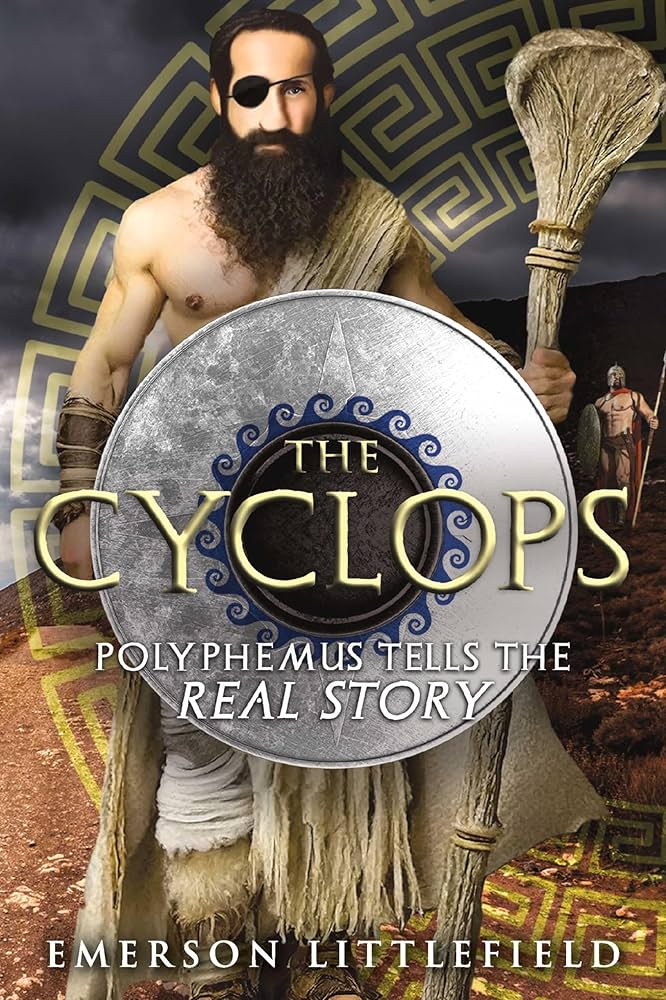
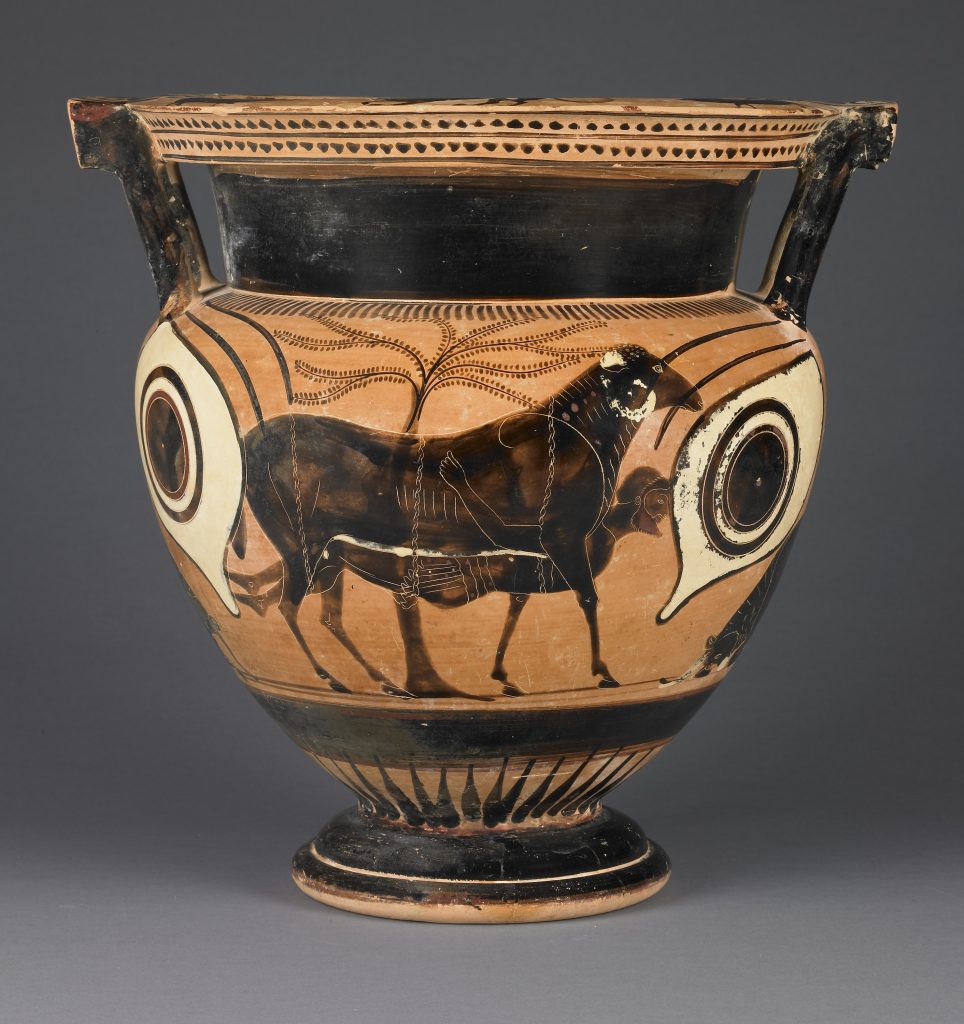
Amongst the many priceless treasures on display at the Archaeological Museum of Eleusis stands a spectacular piece of art: a 7th century BCE funerary amphora depicting the blinding of the cyclops Polyphemus by Odysseus and his companions. In the scene Odysseus is highlighted in chalky white, with one foot off the ground and his arms bent to help guide a stake straight into the eye of the monster in front of him; the viewer is catching Odysseus in action. Meanwhile roughly 7,000 miles away at the Getty Villa in Malibu California, another stunning piece of art recounts the event immediately following the blinding of Polyphemus: Odysseus escaping the cyclops’ cave by clinging to the belly of a ram when the giant sends his flock out to graze.
The story of how Odysseus outmaneuvered a dull-witted but dangerous giant is one of the most exciting scenes in Homer’s Odyssey, and was a popular motif not just in early Greek art but in subsequent ages as well, including both the medieval and modern periods. It is a tale recounted over and over again, and with good reason: there is something irresistibly heroic about the way in which a small but capable leader outwits a giant, man-eating monster.
But what if the story was a lie? What if the real story was told not by the man, but by the monster?
Enter Emerson Littlefield’s The Clyclops: Polyphemus Tells the Real Story, a charming but clumsily-told tale that reverses the traditional roles of good guy vs. bad guy. Instead of the encounter between Odysseus and Polyphemus being narrated by the wily king of Ithaca, the meeting is recounted by Polyphemus, who sets out to prove himself the more reliable narrator.
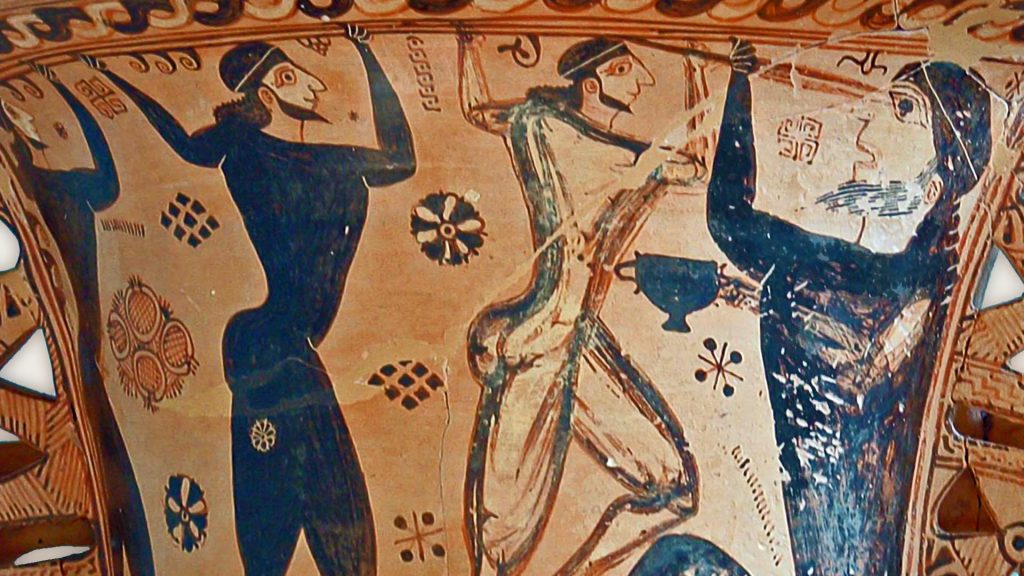
Polyphemus certainly comes across as a more grounded storyteller. He starts off by systematically dismantling the more romantic tales involving himself (his parents were not divine, he was not born with one eye) before launching into a detailed account of his lonely existence. His isolation is the result of being a large and ugly–and decidedly unreligious–man. On an island full of superstitious fisherfolk and farmers, being different is not an asset; even some of his own family members shun him.
Polyphemus’ blunt assessment of his life marks The Cyclops as a refreshing subversion of Homeric tradition, where heroic bragging is as much a skill as heroic strength. This makes it easy to like and trust Polyphemus. Unlike Odysseus, who theatrically recalls his cyclopian encounter to an eager audience in the knowledge it will help spread his fame further, Polyphemus has no reason to bore us with the details of his mundane life other than to clear his good name. And make no mistake: his life is often mundane.
Despite some wonderfully whimsical details about Bronze Age pastoral life (sheep “gambol” in green pastures, olives are cured in saltwater by dangling sacks of them off fishing boats), much of the story –parts of which are repetitive in the absence of a copyeditor– are rather dull. Most chapters focus either on Polyphemus’ shy encounters with a local girl or the verbal abuse he’s forced to endure at the hands of his brother Nicholas. In these moments we learn that Polyphemus is a practical and patient man, neither swayed by excess emotion nor prone to self-aggrandizement. Even after he’s exiled to a remote island for his irreligious attitude–an event that is clearly meant to place him in the path of Odysseus–Polyphemus treats this life-altering change with equanimity. It proves he is everything Odysseus is not: patient, rational, unimaginative.
Unfortunately, this lack of imagination causes Polyphemus to round out the edges of what should be a sharply thrilling climax to the story. When the King of Ithaca finally makes his much-anticipated debut he is introduced not as a worthy opponent or a serious threat but as a cowardly pirate who only manages to induce a minor shake-up in Polyphemus’ otherwise banal existence. It’s so minor a shake-up that the encounter lasts for only two short chapters, and although the straight-forward manner in which the facts are laid out successfully cements Polyphemus as the more reliable narrator of the two, it’s hard not to prefer Odysseus’ colorful fiction to Polyphemus’ monochromatic facts.
Not all facts are bad, though. Littlefield does a good job peppering the story with fun historical tidbits (the Hittites and Egyptians get a nice mention), but he does get a tad sloppy when it comes to chronology. Case in point: Homer’s illustrious works sung of the late Bronze Age Achaeans (1300-1177 BCE) but in The Cyclops the musically-inclined Polyphemus (whose name means “many songs”) doesn’t sing of his deeds. Instead, he writes them down using the Phoenician alphabet, which wasn’t introduced into Greece until the 8th century BCE. (Homer’s heroes would have used a syllabic script known as Liner B). This is a forgivable but surprising oversight; it would make more sense for Polyphemus to sing of his deeds, which could then be orally transmitted through his children and their children until someone could in fact write them down in the Greek alphabet. This would not only create a nice parallel to the transmission of the Odyssey itself, but would allow the giant’s progeny to add a few spicy details in the telling. That would be a song worth signing about, though–as Polyphemus himself would point out–not a very accurate one.